 By Vivian Lee Yao Ting
 From FIFA and Fashion to Education and Economics—What BTS’s Golden Maknae Can Teach Students, Parents, and the Future Workforce.
“What if one of the most powerful business case studies of the twenty-first century isn’t found in a Harvard classroom—but on a concert stage?”
When BTS member Jeon Jung Kook stepped onto the stage at the FIFA World Cup opening ceremony in Qatar in 2022 to perform Dreamers, history was made.
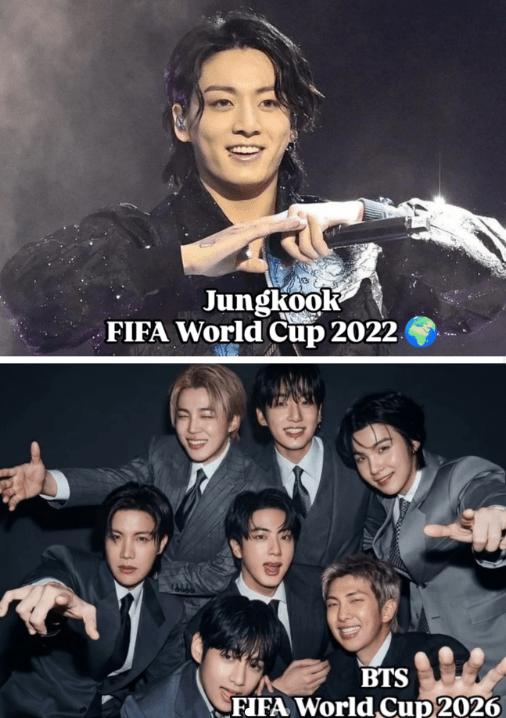
It was more than a musical performance.
A young Korean artist stood before billions of viewers at the world’s biggest sporting event, representing not only himself or his group, but an entire generation of global culture.
Four years later, as BTS celebrates its 13th anniversary through FESTA 2026 and excitement grows around the group’s reported participation in the first-ever FIFA World Cup Final Halftime Show, Jung Kook has become much more than a pop star.
He has become a global brand.
His collaborations with Calvin Klein through the CKJK Collection, luxury partnerships, worldwide influence on fashion and consumer behaviour, and extraordinary ability to shape global conversations offer an unexpected lesson.
Perhaps Jung Kook is not simply changing music.
Perhaps he is helping us understand how the modern economy works.
And perhaps educators, students, businesses, and parents have more to learn from K-pop than they ever imagined.
The New Economy Is Built on Attention
Economists once believed that land, labour, and capital were the most important resources.
Today, many argue there is a fourth resource.
Attention.
In a digital world filled with endless information, the ability to capture and maintain attention has become incredibly valuable.
Jung Kook understands this better than most corporations.
A single Instagram update, airport appearance, or product collaboration can dominate global social media trends within minutes.
News outlets publish stories.
Videos accumulate millions of views.
Products sell out.
Conversations spread across continents.
This is not accidental.
It is the economics of attention.
Companies spend billions of dollars each year trying to achieve the level of engagement that artists like Jung Kook generate naturally.
For business students, this demonstrates a simple but powerful lesson:
In the modern economy, attention often becomes demand.
Demand becomes revenue.
Revenue creates economic growth.
The CKJK Collection:
When Branding Becomes Business Strategy

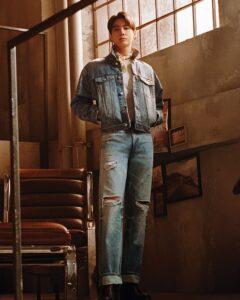


Many people see Jung Kook’s collaboration with Calvin Klein as another celebrity endorsement.
Business analysts see something much bigger.
The CKJK Collection represents the evolution of branding itself.
Traditional advertising tells consumers what to buy.
Modern branding invites consumers to become part of a story.
Fans purchasing CKJK apparel are not simply buying clothes.
They are buying identity.
Confidence.
Authenticity.
Belonging.
Marketing experts call this emotional branding.
Economists call it value creation.
Consumers often attach greater value to products associated with people they admire.
This creates what economists describe as perceived value—a product becomes worth more because of the meaning attached to it.
For students studying marketing, the CKJK Collection provides a real-world example of:
- Brand equity
- Consumer behaviour
- Emotional marketing
- Product differentiation
- International branding
Sometimes the best classroom is the marketplace itself.
From Dreamers to the FIFA World Cup
When Jung Kook performed Dreamers at the FIFA World Cup, millions of football fans encountered K-pop for the very first time.
The performance became one of the defining cultural moments of the tournament.
Now, as reports suggest BTS will perform during the FIFA World Cup 2026 Final Halftime Show, the relationship between sports, entertainment, and business becomes even clearer.
The FIFA World Cup is not simply a football competition.
It is one of the largest economic events in the world.
It drives spending across tourism, hospitality, transportation, advertising, media, and retail.
Adding BTS to this global platform creates enormous cultural and commercial value.
This phenomenon reflects the concept of soft power.
Political scientist Joseph Nye described soft power as the ability of countries to influence others through culture rather than force.
South Korea has mastered this strategy.
Through BTS, global audiences become interested in:
- Korean language.
- Korean fashion.
- Korean food.
- Korean cosmetics.
- Korean tourism.
- Korean technology.
One artist creates opportunities for thousands of businesses.
Culture becomes commerce.
What Every Economics Student Can Learn from Jung Kook


Economics often feels abstract.
Supply and demand.
Consumer behaviour.
Scarcity.
Opportunity cost.
But Jung Kook demonstrates these ideas in action.
Consider limited-edition merchandise.
Photo cards.
Concert tickets.
Special album versions.
Exclusive collaborations.
Why do people queue for hours online?
Why do products sell out within minutes?
The answer lies in scarcity.
When supply is limited, consumers often perceive greater value.
This creates urgency.
Demand increases.
Prices rise.
Entire resale markets emerge.
For students learning economics, BTS merchandise offers a practical illustration of market forces operating in real time.
Sometimes the most effective textbook is everyday life.
Education Has Something to Learn Too
Many lecturers ask the same question.
Why can students spend hours watching comeback trailers but struggle to stay focused during lectures?
Perhaps the answer is not that students have changed.
Perhaps motivation itself has changed.
Before every BTS project, fans experience:
- Countdown events.
- Teaser images.
- Hidden clues.
- Community discussions.
- Interactive content.
Every stage builds anticipation.
Education often focuses only on the final outcome:
Assignments.
Examinations.
Grades.
K-pop focuses on the journey.
It creates emotional investment.
Research in educational psychology suggests that students remember experiences far more effectively than isolated information.
Perhaps classrooms should not compete with entertainment.
Perhaps they should learn from it.
Storytelling.
Curiosity.
Collaboration.
Purpose.
These may become the foundations of future education.
Parents May Be Looking at K-pop Differently
Many parents worry that their children spend too much time following idols.
Certainly, balance matters.
But perhaps there is another perspective.
Many ARMYs develop valuable skills through fandom activities.
They learn graphic design.
They create videos.
They manage social media communities.
They sell products through online platforms.
They communicate with people from different countries.
They organise charity projects.
Without realising it, many are developing skills highly valued by employers:
- Leadership.
- Entrepreneurship.
- Creativity.
- Digital literacy.
- Global communication.
- Project management.
Sometimes learning happens outside the classroom.
Sometimes passion becomes preparation.
Jung Kook and the Future of Business
Artificial Intelligence is transforming the global economy.
Machines can analyse data.
Generate reports.
Write code.
Automate routine tasks.
But AI cannot easily replace authenticity.
It cannot replace emotional connection.
It cannot replace human storytelling.
Jung Kook’s influence demonstrates that the future economy may increasingly reward people who can inspire others.
Businesses now compete not only through products but through communities.
The strongest brands create belonging.
BTS and ARMY represent one of the world’s most successful examples of community-driven business.
Students entering the workforce may discover that technical knowledge alone is not enough.
Creativity, empathy, communication, and cultural understanding are becoming equally valuable.
The Malaysian Perspective
Malaysia has embraced Korean culture in remarkable ways.
Restaurants serve Korean cuisine.
Language centres offer Korean classes.
Retailers stock K-pop merchandise.
Universities increasingly discuss digital marketing, global branding, and the creative economy.
The excitement surrounding BTS FESTA 2026 reflects more than fandom.
It demonstrates how global culture creates local economic activity.
Hotels.
Cafés.
Small businesses.
Online entrepreneurs.
Content creators.
Photographers.
Designers.
Many Malaysians earn income directly or indirectly from the growth of the Korean Wave.
The creative economy is no longer a niche industry.
It is becoming a significant driver of future growth.
The Greatest Lesson of All
Perhaps the world misunderstands K-pop.
People often assume it is simply about music.
But behind every performance lies a lesson about economics.
Behind every collaboration lies a lesson about branding.
Behind every fandom lies a lesson about community.
Behind every comeback lies a lesson about anticipation and motivation.
Jung Kook’s journey—from a teenage trainee to a global ambassador performing on the world’s biggest stages—illustrates what can happen when talent, discipline, creativity, and strategic branding come together.
For educators, it is a reminder that engagement matters.
For businesses, it proves that emotional connection drives value.
For students, it shows that creativity and authenticity can become economic assets.
For parents, it offers reassurance that passion can become purpose.
Final Reflection:
Maybe the Next Great Business School Case Study Wears Purple
As BTS celebrates its 13th anniversary and the world watches Jung Kook continue to shape global culture through music, fashion, and international events like the FIFA World Cup, perhaps we should look beyond the stage.
Perhaps we are witnessing a new model of economics.
One where culture drives commerce.
Communities create value.
Stories build brands.
And education extends far beyond the walls of a classroom.
Maybe Jung Kook is not simply inspiring millions of fans.
Maybe he is quietly teaching an entire generation how the future economy will work.
And perhaps that is why the “Jung Kook Effect” is much bigger than K-pop.
It is a lesson in business, economics, education, and the extraordinary power of human connection.
References
Business Insider, 2026. HYBE reports record revenue during BTS comeback and world tour. Available at: https://www.businessinsider.com/bts-hybe-q1-record-revenue-album-sales-world-tour-2026-4 [Accessed 4 June 2026].
Calvin Klein, 2026. Jung Kook x Calvin Klein: CKJK Collection. Available at: https://www.calvinklein.com [Accessed 4 June 2026].
Forbes, 2025. BTS set grand comeback plan with new album and 2026 world tour. Available at: https://www.forbes.com/sites/jeffbenjamin/2025/07/01/bts-set-grand-comeback-plan-new-album-in-spring-2026-world-tour [Accessed 4 June 2026].
GQ, 2026. Jung Kook on his Calvin Klein collaboration and personal style. Available at: https://www.gq.com [Accessed 4 June 2026].
HYBE Corporation, 2026. HYBE Investor Relations and Corporate Information. Available at: https://hybecorp.com [Accessed 4 June 2026].
Kim, Y., 2023. K-pop Live: Fans, Idols, and Multimedia Performance. Stanford: Stanford University Press.
Reuters, 2026. Fans celebrate BTS comeback as global tour drives economic activity. Available at: https://www.reuters.com/business/media-telecom/fans-honor-sombr-golden-american-music-awards-2026-05-26 [Accessed 4 June 2026].
The Chosun Daily, 2026. BTS unveils FESTA 2026 plans for 13th anniversary celebration. Available at: https://www.chosun.com/english/kpop-culture-en [Accessed 4 June 2026].
World Economic Forum, 2025. The Future of Jobs Report 2025. Geneva: World Economic Forum.