 By Huong Fun Fun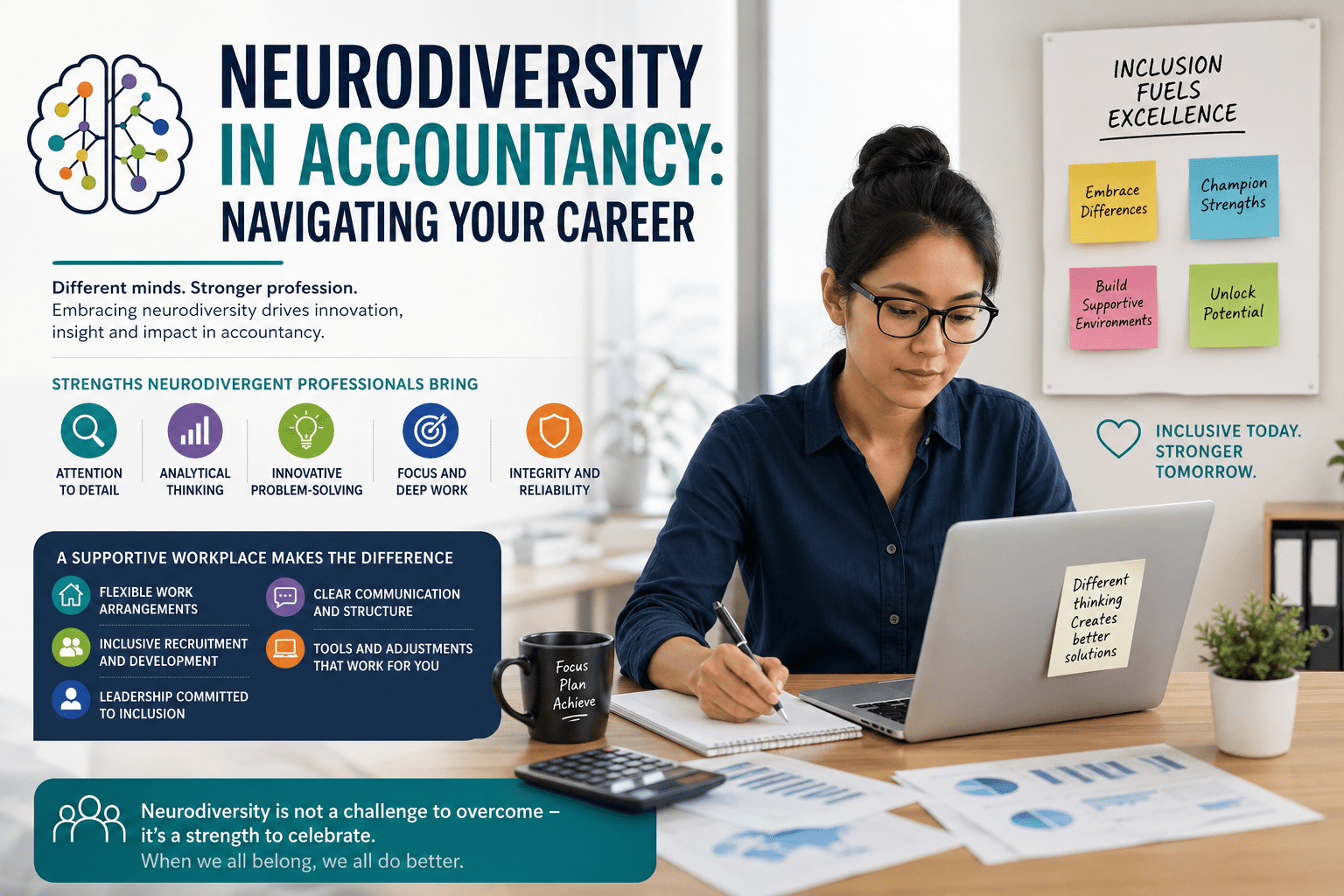
Neurodiversity in accountancy is gaining increasing attention as organisations recognise the value of diverse thinking styles in the workplace. As the profession evolves in a digital and data-driven world, embracing neurodivergent talent is no longer just an inclusion effort—it is a strategic advantage. This article explores how neurodiversity shapes careers in accountancy, the challenges professionals may face, and practical strategies for navigating success.
What is Neurodiversity in Accountancy?
Neurodiversity refers to the natural variation in how human brains function, including conditions such as ADHD, autism, dyslexia, and dyspraxia. Around 15–20% of the population are neurodivergent, making it a significant portion of the global workforce.
In accountancy, neurodivergent professionals often bring unique cognitive strengths such as pattern recognition, analytical thinking, attention to detail, and creative problem-solving. These abilities are particularly valuable in areas like auditing, financial analysis, and risk management.
The Shift: From Awareness to Inclusion
Traditionally, workplaces expected individuals to adapt to rigid systems. However, the narrative is changing. Leading organisations now recognise that work environments must evolve to support diverse cognitive styles, rather than forcing individuals to conform.
This shift is crucial. When organisations invest in neuro-inclusive practices, they benefit from improved innovation, productivity, and talent retention. In fact, neurodiversity is increasingly seen as a competitive advantage rather than a limitation.
Challenges Faced by Neurodivergent Accountants
Despite growing awareness, challenges remain. Neurodivergent professionals may experience:
- Difficulties with traditional communication styles or office environments
- Sensory overload in busy workplaces
- Rigid performance metrics that do not reflect diverse strengths
- Pressure to “mask” or hide differences, leading to burnout
These barriers are often systemic rather than individual. Research highlights that when workplace design improves, neurodivergent professionals can thrive—not just cope.
Strengths That Drive Career Success
Neurodivergent accountants often excel because of their distinct cognitive abilities. Key strengths include:
- Attention to detail – critical for auditing and compliance
- Logical thinking – ideal for financial modelling and analysis
- Innovative problem-solving – useful in complex business scenarios
- Deep focus – enabling high productivity in technical tasks
These strengths demonstrate that neurodiversity is not a disadvantage but a powerful asset when properly supported.
Strategies for Navigating Your Career
For neurodivergent professionals in accountancy, career success involves both self-awareness and strategic action. Key strategies include:
1. Understand Your Cognitive Profile
Recognising your strengths and challenges helps you choose roles and environments that align with your abilities.
2. Make Strategic Disclosure Decisions
Disclosure is a personal choice. Sharing your needs can enable better support, but it should be done thoughtfully.
3. Leverage Technology
Tools such as task managers, automation software, and assistive technologies can significantly enhance productivity.
4. Advocate for Individualised Support
Workplace adjustments should be tailored, not generic. Collaborate with employers to create effective solutions.
5. Build a Personal Support System
Mentors, peers, and professional networks can provide guidance and encouragement throughout your career journey.
The Role of Employers in Neuro-Inclusive Workplaces
While individuals can take proactive steps, organisations play a critical role in shaping inclusive environments. Effective practices include:
- Flexible working arrangements
- Clear communication and structured processes
- Inclusive recruitment and promotion strategies
- Leadership commitment to diversity and inclusion
Companies that adopt these practices not only support employees but also gain access to a broader talent pool and enhanced innovation.
Future of Neurodiversity in Accountancy
The future of accountancy is increasingly inclusive. As awareness grows, more firms are redesigning systems to accommodate diverse ways of thinking. The key question is no longer whether workplaces will become neuro-inclusive, but how quickly they will adapt.
For professionals, this presents an opportunity. By understanding their strengths and navigating their careers strategically, neurodivergent individuals can build fulfilling and successful careers in accountancy.
Conclusion
Neurodiversity in accountancy represents a shift towards a more inclusive and innovative profession. By recognising strengths, addressing systemic barriers, and adopting supportive strategies, both individuals and organisations can unlock significant value.
Navigating a career as a neurodivergent accountant may come with challenges, but with the right environment and mindset, it can also be a powerful pathway to success.
Read More:
- Neurodiversity in accountancy: navigating your career: https://www.accaglobal.com/gb/en/professional-insights/pro-accountants-the-future/neurodiversity-navigating.html
-
ACCA report urges inclusive workplaces: https://www.thestar.com.my/news/education/2026/04/26/acca-report-urges-inclusive-workplaces
-
Accounting in the Age of AI: Advice Every Student Needs to Know in 2025: https://blog.fame.edu.my/accounting-ai/