 By Kong Lan Phang
 Good and Bad Behaviors of College Students Nowadays and Ways transform Negative Behaviors

Introduction
College life is an important stage in a student’s academic and personal development. It is a time when students learn not only academic knowledge but also responsibility, discipline, and social skills. Nowadays, college students are exposed to many opportunities, including advanced technology, online learning tools, and global communication platforms. Howe
ver, alongside these opportunities, certain behavioral challenges have become more noticeable among students. Some students demonstrate excellent habits that support their success, while others develop negative behaviors that may affect
their academic performance and future careers.
Understanding both good and bad behaviors among college students is essential for educators, parents, and students themselves. By recognizing these behaviors and learning strategies to improve them, students can achieve better academic outcomes and develop strong personal values.
Good Behaviors of College Students Nowadays
Many college students today display positive behaviors tha
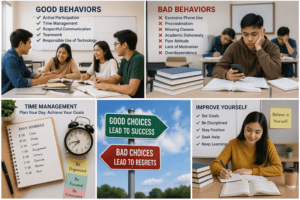
t contribute to their academic and personal success. These behaviors help them grow into responsible individuals and prepare them for future careers.
1. Active Participation in Learning
One of the most commendable behaviors among college students is active participation in class activities. Students who ask questions, share opinions, and engage in discussions demonstrate curiosity and a willingness to learn. This behavior improves understanding and builds confidence.
Active learners also tend to perform better academically because they are involved in the learning process rather than passively listening.
2. Effective Time Management
Successful students often demonstrate good time management skills. They plan their schedules, complete assignments before deadlines, and balance academic tasks with extracurricular activities.
Time management allows students to avoid stress and maintain consistency in their academic work. It also helps them develop responsibility, which is essential for professional life.
3. Responsible Use of Technology
Technology has become a major part of education. Many students use digital tools such as online libraries, learning platforms, and communication applications to enhance their studies. Responsible use of technology includes researching reliable information, submitting assignments online, and participating in virtual discussions.
When used properly, technology becomes a powerful learning tool that supports academic achievement.
4. Respectful Communication
Respectful communication is another positive behavior observed among college students. Students who listen carefully to lecturers and peers, speak politely, and respect different opinions create a positive learning environment.
Such behavior promotes teamwork, reduces conflicts, and strengthens relationships within the academic community.
5. Collaboration and Teamwork

Group assignments and projects require teamwork skills. Many students demonstrate cooperation by sharing ideas, dividing tasks fairly, and supporting group members.
Collaboration helps students learn from one another and prepares them for professional environments where teamwork is essential.
Bad Behaviors of College Students Nowadays
Despite the presence of many positive behaviors, some negative behaviors among college students have become increasingly common. These behaviors may hinder academic progress and personal growth.
1. Excessive Use of Mobile Phones
One of the most common bad behaviors is excessive use of mobile phones during lectures or study time. Some students spend more time on social media, gaming, or entertainment instead of focusing on their studies.
This behavior reduces concentration and leads to poor academic performance.
2. Procrastination
Procrastination is the habit of delaying tasks until the last minute. Many students postpone assignments, revisions, and projects, leading to rushed work and lower-quality results.
Procrastination often causes stress, anxiety, and missed deadlines.
3. Lack of Attendance and Punctuality
Regular attendance is essential for academic success. However, some students frequently skip classes or arrive late. This behavior results in missed lessons, incomplete understanding, and difficulty keeping up with coursework.
Poor punctuality also reflects a lack of discipline and responsibility.
4. Academic Dishonesty
Academic dishonesty includes cheating during exams, copying assignments, and plagiarism. This behavior not only affects academic integrity but also prevents students from learning honestly.
Such actions may lead to serious consequences, including disciplinary action or academic failure.
5. Poor Communication and Attitude
Some students display negative attitudes such as disrespecting lecturers, ignoring instructions, or refusing to cooperate with classmates.
Poor communication can create misunderstandings and disrupt the learning environment.
6. Lack of Motivation
Another concern among college students is a lack of motivation to learn. Some stu dents attend college without clear goals or interest in their studies.
This behavior leads to low academic performance and reduced engagement in academic activities.
7. Overdependence on Others
Certain students rely too much on classmates or online sources to complete assignments instead of developing their own skills.
Overdependence limits independent thinking and reduces problem-solving ability.
Seven Ways to Improve Bad Behaviors Among College Students
Improving negative behaviors requires consistent effort from students, educators, and institutions. The following strategies can help students develop better habits and attitudes.
1. Set Clear Academic Goals
Students should establish short-term and long-term academic goals. Clear goals provide direction and motivation. For example, students may set targets to achieve certain grades or complete assignments ahead of deadlines.
Having goals encourages students to remain focused and responsible.
2. Develop a Daily Study Schedule
Creating a daily or weekly study plan helps students manage their time effectively. Scheduling specific hours for studying, revising, and completing assignments reduces procrastination.
Consistency in following a schedule builds discipline and improves productivity.
3. Limit Distractions from Technology
Students should learn to control their use of mobile phones and social media during study time. Turning off notifications or using applications that block distractions can improve concentration.
Responsible technology use supports better learning outcomes.
4. Practice Self-Discipline
Self-discipline involves controlling one’s actions and staying committed to responsibilities. Students should train themselves to attend classes regularly, submit assignments on time, and follow academic rules.
Strong self-discipline leads to improved academic performance and personal growth.
5. Seek Guidance and Support
Students facing academic challenges should seek help from lecturers, tutors, or academic advisors. Asking questions and attending consultation sessions can clarify doubts and improve understanding.
Support from educators plays an important role in guiding students toward better behavior.
6. Participate in Positive Activities
Joining clubs, workshops, or community programs can help students develop leadership and social skills. Positive activities also reduce negative habits by keeping students engaged in meaningful tasks.
These experiences build confidence and encourage responsible behavior.
7. Reflect on Personal Behavior
Self-reflection allows students to evaluate their strengths and weaknesses. By identifying negative habits, students can make conscious efforts to improve themselves.
Regular reflection promotes self-awareness and encourages personal responsibility.
Conclusion
Behavior plays a crucial role in shaping the academic success and personal development of college students. While many students demonstrate positive behaviors such as active participation, responsible technology use, and teamwork, others struggle with negative habits like procrastination, poor attendance, and excessive phone usage.
Improving these negative behaviors requires commitment, discipline, and support from educators and institutions. By setting clear goals, managing time effectively, limiting distractions, and seeking guidance when needed, students can overcome challenges and build positive habits.
Ultimately, developing good behavior during college years prepares students for successful careers and responsible citizenship. Positive attitudes, strong discipline, and continuous self-improvement will help students achieve their full potential in both academic and professional life.