 By Huong Fun Fun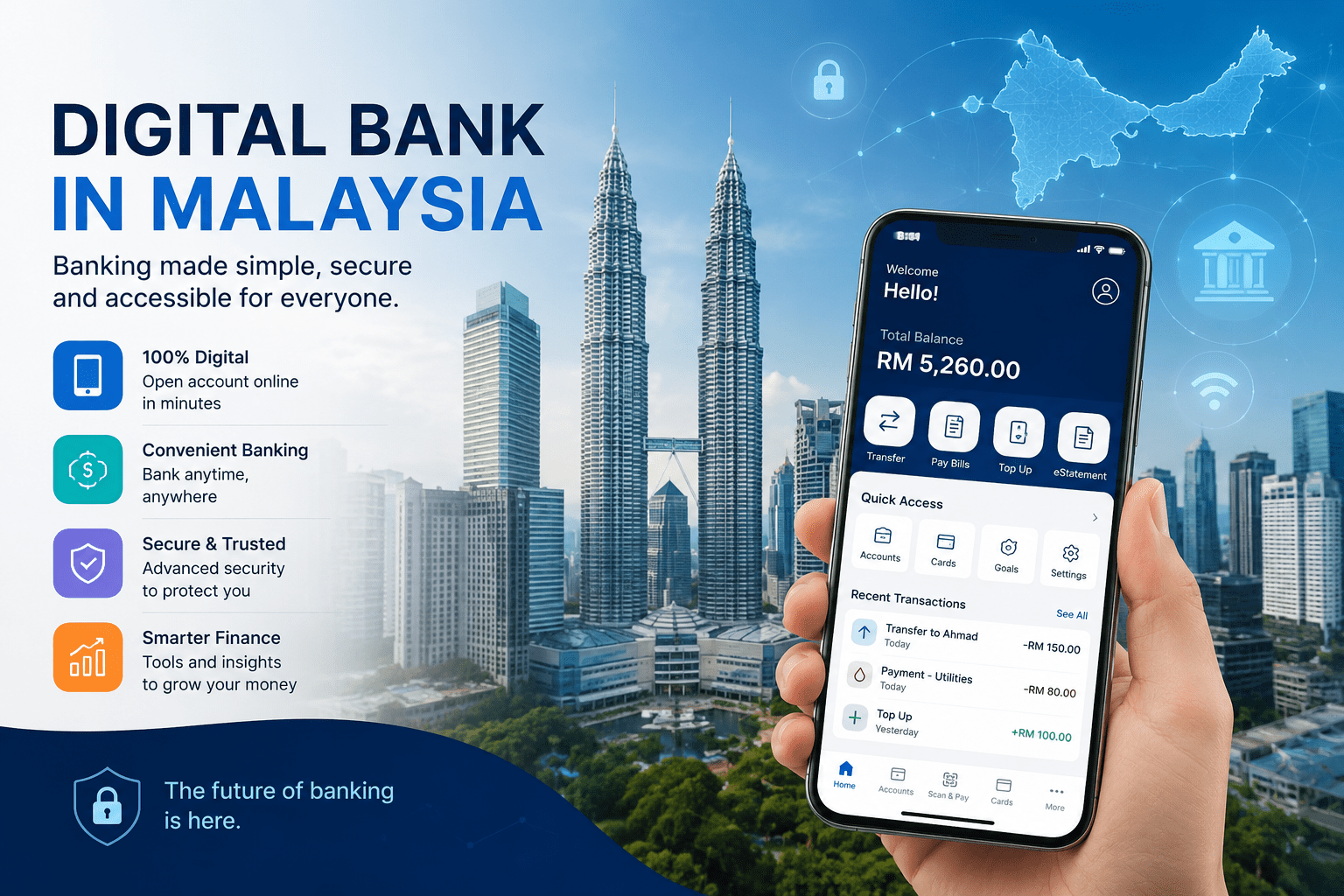
The banking industry in Malaysia is rapidly evolving with the introduction of digital banks. Over the past few years, digital banking has gained significant attention due to advancements in technology, increasing internet penetration, and changing consumer preferences. A digital bank in Malaysia offers banking services entirely through online platforms and mobile applications without relying heavily on physical branches. This innovation is reshaping how Malaysians manage their finances and access banking services.
What is a Digital Bank?
A digital bank is a financial institution that provides banking services through digital channels such as mobile apps, websites, and online platforms. Unlike traditional banks, digital banks focus on delivering faster, more convenient, and cost-effective banking experiences. Customers can open accounts, transfer money, apply for loans, make investments, and manage their finances entirely online.
In Malaysia, digital banking is regulated by Bank Negara Malaysia, which introduced digital banking licenses to encourage financial innovation and improve financial inclusion. The initiative aims to provide better access to banking services, especially for underserved communities and small businesses.
Growth of Digital Banking in Malaysia
The growth of digital banking in Malaysia has accelerated due to increasing smartphone usage and internet accessibility. Consumers today prefer convenient banking services that can be accessed anytime and anywhere. The COVID-19 pandemic also played a major role in encouraging cashless transactions and online banking adoption.
Several major companies and consortiums have entered the digital banking market in Malaysia. The entry of digital banks is expected to create healthy competition within the banking industry while offering customers more innovative financial solutions.
Digital banks are especially attractive to younger consumers who value speed, convenience, and personalized financial services. Features such as instant account opening, low transaction fees, budgeting tools, and AI-driven financial advice have become key selling points for digital banking platforms.
Five Digital Banks in Malaysia
Malaysia has introduced several licensed digital banks that are expected to transform the financial industry. Below are five notable digital banks in Malaysia:
1. GXBank

GXBank is one of the first operational digital banks in Malaysia. It is backed by a consortium led by Grab Holdings and Singtel. GXBank focuses on providing accessible digital banking services with user-friendly mobile banking features.
2. Boost Bank
Boost Bank is supported by Boost and RHB Bank. The bank aims to empower underserved communities and small businesses through digital financial solutions, including digital payments and financing services.
3. AEON Bank

AEON Bank is part of the AEON Group and focuses on offering inclusive banking services to consumers through digital platforms. It leverages AEON’s large retail ecosystem to provide convenient financial solutions.
4. KAF Digital Bank
KAF Digital Bank is backed by a consortium of local and international investors. The bank aims to deliver innovative Islamic digital banking services tailored to both individuals and businesses.
5. Ryt Bank

Ryt Bank is another emerging digital banking player in Malaysia. It focuses on delivering seamless digital banking experiences with strong emphasis on technology-driven financial services.
Benefits of Digital Banks in Malaysia
1. Convenience and Accessibility
One of the biggest advantages of digital banks is convenience. Customers can perform banking transactions 24/7 without visiting physical branches. This is particularly beneficial for individuals living in rural areas where traditional banking facilities may be limited.
2. Lower Banking Costs
Digital banks generally operate with lower overhead costs because they do not require extensive branch networks. As a result, customers may enjoy lower service charges, competitive interest rates, and reduced transaction fees.
3. Faster Financial Services
Digital banks utilize advanced technology and automation to process transactions quickly. Account registration, fund transfers, and loan approvals can often be completed within minutes. This improves customer satisfaction and enhances overall banking efficiency.
4. Enhanced Financial Inclusion
Digital banking can help underserved populations gain access to financial services. Small businesses, gig workers, and individuals without traditional banking history may find it easier to access banking products through digital platforms.
Challenges Facing Digital Banks
Despite the promising future of digital banking in Malaysia, there are several challenges that need to be addressed. Cybersecurity remains one of the biggest concerns. Since digital banks rely heavily on online systems, they must invest significantly in protecting customer data and preventing cyber threats.
Another challenge is building customer trust. Many consumers still prefer traditional banks due to familiarity and the availability of physical branches. Digital banks must therefore focus on providing reliable customer support and secure banking experiences.
Regulatory compliance is also important. Digital banks must comply with strict regulations set by Bank Negara Malaysia to ensure financial stability and consumer protection.
Future of Digital Banking in Malaysia
The future of digital banking in Malaysia appears highly promising. As technology continues to advance, digital banks are expected to introduce more innovative features such as artificial intelligence, personalized financial management, blockchain technology, and integrated payment ecosystems.
Malaysia’s push towards a digital economy will further support the growth of digital banking. Consumers are increasingly embracing cashless payments, e-wallets, and online financial services. This trend creates opportunities for digital banks to expand their customer base and develop new financial products.
In conclusion, digital banks in Malaysia are transforming the financial landscape by offering convenient, accessible, and technology-driven banking services. While challenges such as cybersecurity and customer trust remain important, the long-term outlook for digital banking is positive. As competition grows and innovation continues, digital banks are expected to play a major role in shaping the future of Malaysia’s financial industry.
Additional Reading:
1. The Full List of Digital Banks in Malaysia and Their Top Benefits (2026): https://fintechnews.my/48009/digital-banking-news-malaysia/list-of-digital-banks-in-malaysia/
2. Five successful applicants for the digital bank licences: https://www.bnm.gov.my/-/digital-bank-5-licences
3. Fintech Landscape in Malaysia: https://blog.fame.edu.my/fintech-malaysia/