 By Aniza Elya Liyana Bt Md Ahsan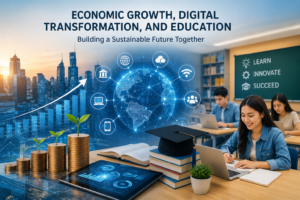
Introduction
Economic growth, digital transformation, and education are three important pillars of modern society. These elements are closely connected and influence the development of individuals, businesses, and nations. As technology continues to evolve, countries must adapt to changing economic conditions while ensuring that citizens have access to quality education. A strong economy creates opportunities for employment and investment, digital technology improves efficiency and communication, and education prepares people with the knowledge and skills needed to succeed. Together, these three areas contribute to innovation, social progress, and sustainable development.
Economic Development
Economic development refers to the improvement of a country’s financial health and the overall well-being of its people. A growing economy creates more jobs, increases income, and raises the standard of living. Governments can use economic growth to invest in healthcare, transportation, infrastructure, and public services that benefit society.
Businesses also contribute to economic development by producing goods and services, creating employment opportunities, and encouraging innovation. However, economies face challenges such as inflation, unemployment, and global competition. To remain competitive, countries must support entrepreneurship, encourage investment, and develop a highly skilled workforce. Sustainable economic growth should also focus on reducing poverty, protecting the environment, and ensuring equal opportunities for everyone.
Digital Transformation
According to the World Bank’s Digital Development program, digital technologies play a vital role in improving economic opportunities and public services. Digital transformation is changing the way people live, work, and communicate. Technologies such as the internet, artificial intelligence, cloud computing, and digital payment systems have become essential in daily life. Businesses use digital tools to improve productivity, reduce operational costs, and reach customers around the world. Many organizations have also adopted remote working and online collaboration platforms to increase efficiency.
Governments are using digital technology to provide online public services, electronic tax systems, and digital healthcare. These innovations make services more accessible and convenient for citizens. Despite these advantages, digital transformation also presents challenges, including cybersecurity risks, data privacy concerns, and unequal access to technology. Therefore, improving digital infrastructure and promoting digital literacy are essential to ensure that everyone can benefit from technological advancement.
The Importance of Education
The UNESCO Education program emphasizes that quality education and lifelong learning are essential for sustainable development. Education is the foundation of individual and national development. It provides people with the knowledge, skills, and values needed to contribute to society and the economy. In today’s digital era, education is no longer limited to traditional classrooms. Students can learn through online courses, virtual classrooms, educational applications, and digital learning platforms.
Educational institutions must continuously update their teaching methods and curricula to meet the changing demands of the modern workforce. In addition to academic knowledge, students should develop critical thinking, communication, teamwork, creativity, and digital skills. Teachers also play an important role in guiding students to use technology responsibly while encouraging innovation and lifelong learning.
The Relationship Between Economy, Digital Technology, and Education
Economic growth, digital transformation, and education support one another. A strong education system produces skilled workers who contribute to innovation and economic productivity. At the same time, digital technology improves education by providing greater access to information, interactive learning experiences, and flexible study opportunities.
Modern businesses increasingly require employees with digital skills, making technology-based education more valuable than ever. Governments that invest in quality education and digital infrastructure are better positioned to develop a competitive workforce that supports long-term economic growth. This continuous cycle of learning, innovation, and productivity helps nations remain competitive in the global economy.
Conclusion
Economic development, digital transformation, and education are essential for building a successful and sustainable future. A strong economy provides the resources needed to invest in education and technology, while education develops skilled individuals who can drive innovation and adapt to changing industries. Digital technology connects these two areas by improving communication, increasing efficiency, and expanding access to knowledge. By strengthening these three pillars, countries can create more opportunities, improve the quality of life for their citizens, and achieve sustainable growth in an increasingly digital world.
For additional insights, visit our About Us page.