 By Huong Fun Fun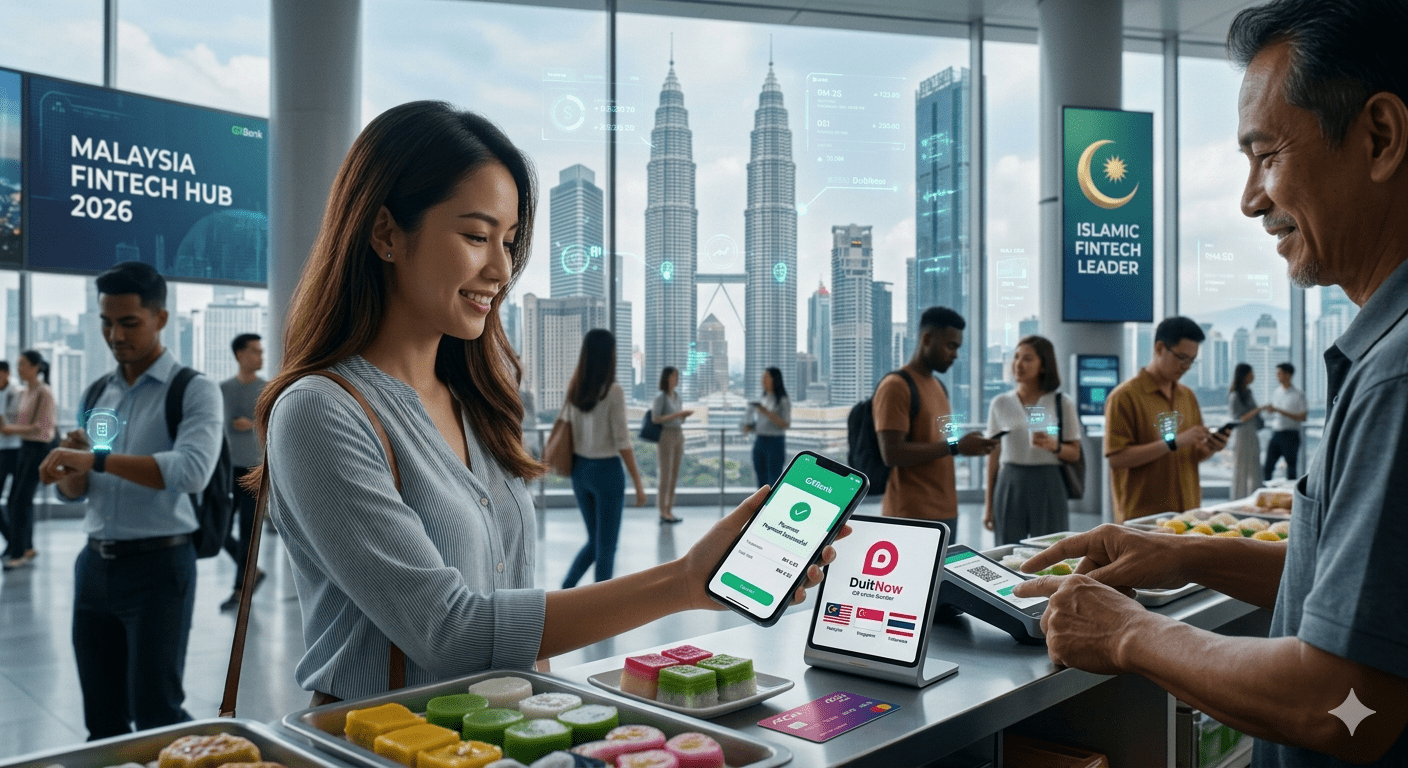
As of 2026, Malaysia has officially transitioned from a “fast-growing” fintech market to a mature regional powerhouse. With the digital economy now contributing over 25% to the national GDP, the financial technology sector has become the backbone of Malaysian commerce. Valued at approximately USD 12.07 billion this year, the industry is no longer just about e-wallets; it is a sophisticated ecosystem of digital banks, AI-driven Islamic finance, and seamless cross-border connectivity. (Read more)
This article explores the defining trends of Malaysia’s fintech landscape in 2026 and what they mean for consumers and businesses.
1. The Era of the Digital Bank
2026 marks a significant milestone: Malaysia’s five licensed digital banks (including GXBank, AEON Bank, and Boost Bank) have moved past their infancy. These institutions collectively hold over RM 3.1 billion in deposits, serving nearly 2 million customers.
Unlike traditional banks, these digital-native entities have successfully penetrated the “unbanked” and “underserved” segments. Gig workers, micro-SMEs, and rural residents now access credit through AI-driven credit scoring rather than traditional collateral, fostering a more inclusive economy. (Read more)
2. Islamic Fintech: A Global Leadership Position
Malaysia has solidified its status as the world’s premier hub for Islamic Fintech. By 2026, Shariah-compliant financing accounts for nearly 44% of total system loans. (Read More)
The innovation isn’t just in banking; it’s in the “Wealthtech” space. Platforms now offer:
-
Tokenized Sukuk: Allowing retail investors to buy fractional shares of Islamic bonds.
-
Automated Zakat & Waqf: Integrated digital platforms that use blockchain for transparent social finance.
-
Halal Ecosystem Integration: Fintech tools that help SMEs track Shariah compliance across their entire supply chain.
3. The Death of Borders: Cross-Border Payments
Remember the days of high remittance fees? In 2026, those are a relic of the past. The DuitNow-PayNow linkage (Malaysia-Singapore) has expanded into a broader ASEAN network. (Read More)
Furthermore, in February 2026, PayNet signed a landmark agreement with India’s NPCI, allowing millions of Malaysians to use their local e-wallets for QR payments in India and vice versa. This “QR-without-borders” reality has revolutionized regional tourism and trade.
4. Central Bank Digital Currency (CBDC) & Stablecoins
Bank Negara Malaysia (BNM) is currently making waves with its Digital Asset Innovation Hub (DAIH). By late 2026, the central bank is expected to provide full regulatory clarity on Ringgit Stablecoins and tokenized deposits. This moves Malaysia closer to a wholesale CBDC, which would make large-scale corporate transactions almost instantaneous and significantly cheaper. (Read More)
5. Embedded Finance: The “Invisible” Fintech
In 2026, you rarely “go” to a fintech app. Instead, finance is embedded into everything. Whether you are buying a car on a marketplace, booking a flight, or ordering groceries, the financing (Buy Now, Pay Later), insurance (Insurtech), and payment are integrated into the checkout flow. This “Invisible Finance” model has driven the retail fintech segment to account for over 64% of the market share. (Read More)
Challenges: The 2026 Reality Check
Despite the growth, the landscape faces two primary hurdles:
-
Cyber-Fraud: As transactions go digital, phishing and AI-generated scams have become more sophisticated, leading to a massive national push for “Kill Switch” features and biometric-only authorizations.
-
The Talent Gap: There is an urgent demand for “deep-tech” professionals who understand both Shariah law and blockchain coding—a hybrid skill set that remains in short supply. (Find Out FinTech Programme here)
Conclusion
The state of Fintech in Malaysia in 2026 is one of permanence. The industry has shifted from “disrupting” traditional banks to “collaborating” with them. For the average Malaysian, this means more personalized, ethical, and borderless financial freedom than ever before. As we look toward 2030, the goal is clear: a fully digital, highly inclusive, and Shariah-compliant financial future.