 By Huong Fun Fun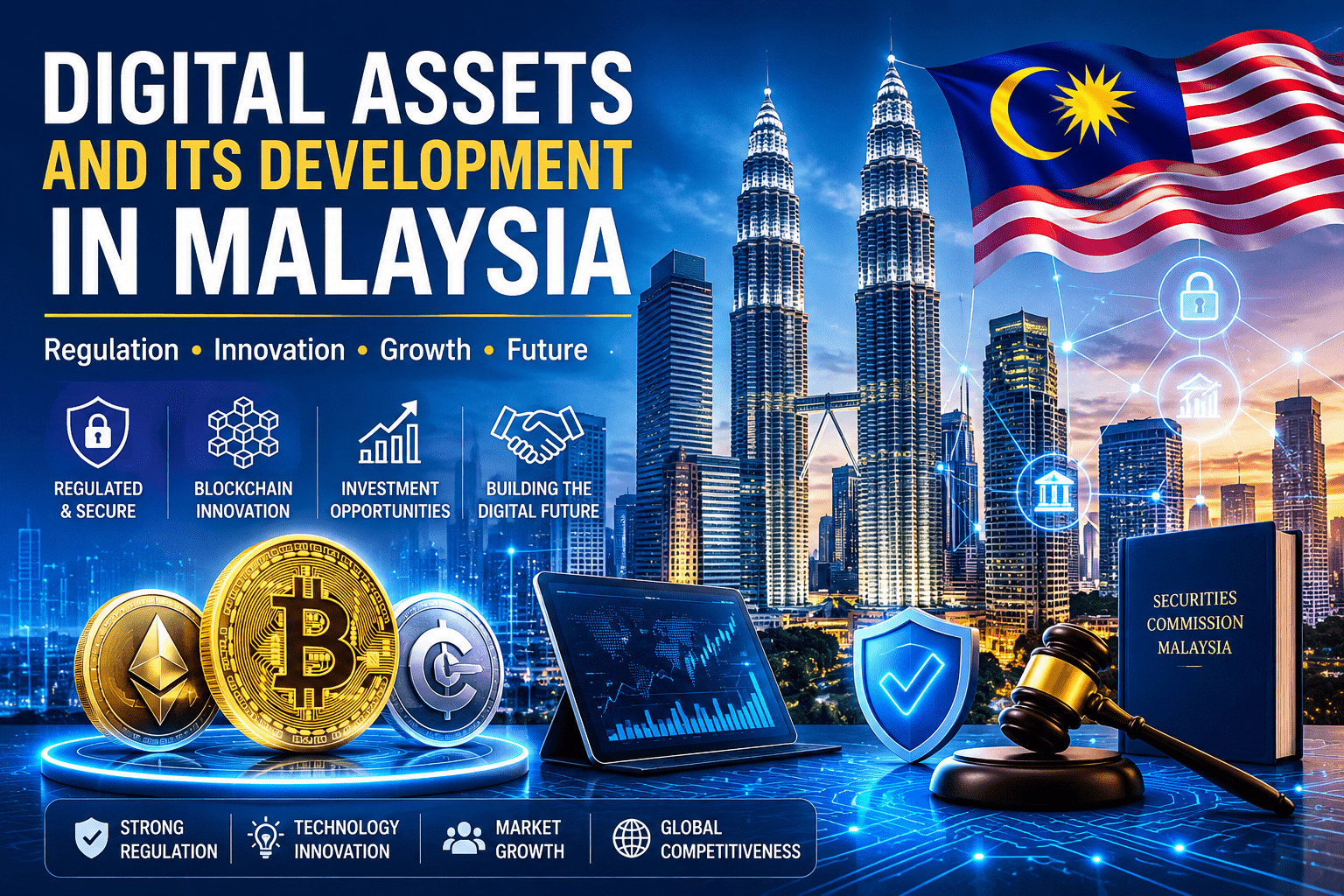
Introduction to Digital Assets in Malaysia
Digital assets are rapidly transforming the global financial landscape, and Malaysia is actively positioning itself as a regulated and innovation-driven hub in Southeast Asia. These assets include cryptocurrencies, digital tokens, stablecoins, and blockchain-based financial instruments that enable secure, transparent, and decentralised transactions.
In Malaysia, the growth of digital assets is closely guided by regulatory oversight, particularly from the Securities Commission Malaysia (SC), ensuring that innovation develops alongside investor protection and financial stability.
What Are Digital Assets?
Digital assets refer to any asset that exists in digital form and holds value. Common examples include:
- Cryptocurrencies such as Bitcoin and Ethereum
- Security tokens representing investment contracts
- Stablecoins pegged to fiat currencies
- Non-fungible tokens (NFTs) representing digital ownership
- Tokenised real-world assets such as property or shares
These assets are powered by blockchain technology, which ensures transparency, immutability, and decentralisation, making them increasingly attractive for investors and businesses.
Regulatory Framework in Malaysia
Malaysia is one of the earliest adopters of a structured regulatory framework for digital assets in the region. The key regulatory milestone was the Capital Markets and Services (Prescription of Securities) (Digital Currency and Digital Token) Order 2019, which brought digital assets under securities law.
Following this, the Securities Commission Malaysia introduced the Guidelines on Digital Assets, which regulate:
- Digital Asset Exchanges (DAX)
- Initial Exchange Offerings (IEO)
- Digital Asset Custodians (DAC)
These guidelines are regularly updated to reflect global market developments and strengthen investor protection.
A detailed overview of these regulatory developments is available in Fintech News Malaysia’s report on Malaysia’s digital asset framework:
https://fintechnews.my/58654/blockchain/malaysia-digital-asset-guidelines/
This article highlights how Malaysia’s regulatory approach balances innovation with compliance, ensuring that digital asset activities remain within a controlled and transparent environment.
Licensed Digital Asset Ecosystem
Malaysia has approved several regulated Digital Asset Exchanges (DAX), allowing users to trade cryptocurrencies legally under SC supervision. These include platforms such as Luno Malaysia, MX Global, SINEGY DAX, HATA Digital, and Kinetic DAX.
These exchanges must comply with strict requirements such as:
- Know Your Customer (KYC) verification
- Anti-Money Laundering (AML) compliance
- Cybersecurity and operational risk management
- Safeguarding of customer assets
This regulated environment helps reduce fraud risks and increases trust in the digital asset market.
Growth of Blockchain Innovation
Beyond trading, blockchain technology is driving innovation across multiple industries in Malaysia, including finance, logistics, healthcare, and public services.
One of the key innovations is the Initial Exchange Offering (IEO) framework, which allows startups to raise funds through token offerings on approved exchanges. Unlike traditional ICOs, IEOs are supervised by regulated platforms, improving transparency and due diligence.
According to industry analysis, Malaysia’s structured approach has made it a regional leader in regulated digital fundraising and blockchain adoption.
Recent Developments in Malaysia’s Digital Asset Market
Malaysia continues to refine its digital asset regulations to align with global financial trends. Recent updates by the Securities Commission focus on:
- Strengthening investor protection mechanisms
- Improving listing processes for digital assets
- Enhancing operational resilience of exchanges
- Expanding market access through regulated innovation
A 2024–2025 review shows increasing trading activity and institutional participation, signalling stronger confidence in Malaysia’s digital asset ecosystem.
Additionally, regulators are exploring ways to streamline approval processes for digital asset listings while maintaining strict governance standards, ensuring a more efficient but secure market environment.
Challenges in the Digital Asset Industry
Despite strong progress, Malaysia’s digital asset sector still faces several challenges:
- High volatility of cryptocurrency prices
- Cybersecurity threats and hacking risks
- Limited public understanding of blockchain technology
- Regulatory compliance costs for businesses
- Risks of unregulated platforms and scams
Authorities continue to emphasise that digital assets are not legal tender in Malaysia and should be treated as high-risk investments.
Future Outlook of Digital Assets in Malaysia
The future of digital assets in Malaysia looks promising as the country continues to develop a balanced regulatory ecosystem. With increasing adoption of blockchain technology and growing investor interest, Malaysia is expected to expand its role as a regional fintech and digital finance hub.
Key future trends include:
- Expansion of tokenised real-world assets
- Growth of stablecoin-related innovations
- Institutional adoption of blockchain solutions
- Integration of digital assets into traditional finance systems
As regulatory frameworks mature, Malaysia is likely to attract more global fintech companies and blockchain startups.
Conclusion
Digital assets are reshaping Malaysia’s financial ecosystem by introducing new opportunities for investment, innovation, and economic growth. Through strong regulatory oversight by the Securities Commission Malaysia and continuous policy updates, the country is successfully balancing innovation with investor protection.
With a structured framework and growing adoption, Malaysia is well-positioned to become a leading digital asset hub in Southeast Asia.
Sources
- Securities Commission Malaysia (SC). Digital Assets Overview
https://www.sc.com.my/digital-assets - Securities Commission Malaysia (SC). Guidelines on Digital Assets (Updated)
https://www.sc.com.my/regulation/guidelines/digital-assets - Fintech News Malaysia. Malaysia Digital Asset Guidelines Overview
https://fintechnews.my/58654/blockchain/malaysia-digital-asset-guidelines/ - SC Media Release. Regulatory Updates on Digital Asset Exchanges
https://www.sc.com.my/resources/media/media-release/sc-issues-revised-guidelines-on-recognized-markets-for-digital-asset-exchange