 By Diana Lia Anak Muling
 SIDS Prevention: Safe Sleep Saves Lives from the Very Beginning
SIDS prevention starts with one simple but powerful idea: how and where a baby sleeps can save their life. Sudden Infant Death Syndrome (SIDS) is a devastating and often unexplained tragedy that affects infants, usually during sleep. While it cannot always be predicted, many cases are preventable through safe sleep practices and informed caregiving.
This article explains SIDS in clear, everyday language, helping parents, caregivers, and families understand what SIDS is, why it happens, and most importantly, how to reduce the risk from the very beginning of a baby’s life.
Table of Contents
-
What Is Sudden Infant Death Syndrome (SIDS)?
-
Why SIDS Prevention Matters
-
Key Risk Factors Associated with SIDS
-
SIDS Prevention Through Safe Sleep Practices
-
Sleep Position
-
Sleep Surface
-
Sleep Environment
-
-
Common Myths About SIDS
-
The Role of Parents and Caregivers in SIDS Prevention
-
When to Seek Medical Advice
-
Helpful Resources for Parents
-
Final Thoughts: Safe Sleep Saves Lives
What Is Sudden Infant Death Syndrome (SIDS)?
Sudden Infant Death Syndrome, commonly known as SIDS, refers to the sudden and unexplained death of an otherwise healthy baby under one year of age. It often occurs during sleep and remains unexplained even after thorough investigation.
SIDS is sometimes called “crib death” because it usually happens when babies are sleeping in their cribs. Although the exact cause is unknown, research shows that SIDS is linked to a combination of physical vulnerability, critical developmental stages, and external stressors such as unsafe sleep environments.
Why SIDS Prevention Matters
SIDS is one of the leading causes of death among infants aged one month to one year. The emotional impact on families is profound, but the tragedy is made even heavier by the fact that many risk factors are preventable.
SIDS prevention is not about creating fear—it is about empowering parents with knowledge. Simple changes in sleep habits and environments can significantly reduce the risk and help ensure babies sleep safely.
Key Risk Factors Associated with SIDS
Understanding risk factors is essential for effective SIDS prevention. These include:
-
Sleeping on the stomach or side
-
Soft mattresses, pillows, or loose bedding
-
Overheating during sleep
-
Exposure to cigarette smoke
-
Bed-sharing in unsafe conditions
-
Premature birth or low birth weight
While not all risk factors can be controlled, many can be reduced with informed choices.
SIDS Prevention Through Safe Sleep Practices
Back Sleeping: The Golden Rule of SIDS Prevention
Placing babies on their backs to sleep is one of the most effective SIDS prevention strategies. This position keeps airways open and reduces the risk of suffocation.
Babies should always be placed on their backs for naps and nighttime sleep—even if they can roll over on their own.
Firm and Flat Sleep Surfaces
A firm mattress covered with a fitted sheet is the safest sleep surface. Avoid soft items such as:
-
Pillows
-
Quilts
-
Stuffed toys
-
Sleep positioners
These items increase the risk of accidental suffocation and should never be placed in a baby’s sleeping area.
Creating a Safe Sleep Environment
A baby’s sleep area should be simple and clutter-free. The safest setup includes:
-
A crib, bassinet, or portable play yard
-
No loose bedding or soft objects
-
Baby sleeping alone but in the same room as parents
Room-sharing without bed-sharing is strongly recommended for SIDS prevention, especially during the first six months.
📷 Image Example
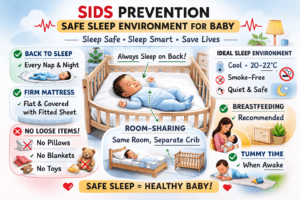
Safe sleep saves lives. Always place your baby on their back, use a firm mattress, keep the crib free from loose items, and share the room—not the bed. Small steps today can protect your baby’s life tomorrow. 💙👶
Common Myths About SIDS
“My baby sleeps better on their stomach”
While babies may appear to sleep more deeply on their stomachs, deep sleep can reduce their ability to wake up if breathing is compromised.
“SIDS can’t happen if the baby is healthy”
SIDS can affect babies who appear completely healthy. This is why preventive measures are important for all infants.
The Role of Parents and Caregivers in SIDS Prevention
Everyone involved in a baby’s care must follow the same safe sleep guidelines. This includes:
-
Parents
-
Grandparents
-
Babysitters
-
Childcare providers
Consistency is key. A baby placed on their back at home should be placed the same way everywhere else.
Breastfeeding, regular health check-ups, and keeping immunizations up to date are also associated with lower SIDS risk.
When to Seek Medical Advice
If you have concerns about your baby’s sleep habits, breathing, or development, consult a healthcare professional immediately. Trust your instincts—no concern is too small when it comes to your child’s safety.
Helpful Resources for Parents
For evidence-based guidance on SIDS prevention, visit trusted health organizations such as:
-
Safe to Sleep® Campaign – Official guide on how to reduce the risk of Sudden Infant Death Syndrome, sleep safety basics, and downloadable materials for parents and caregivers. Safe to Sleep® – SIDS Prevention and Safe Sleep Resources
-
Safe to Sleep® Shareable Resources – Free resources, videos, toolkits, and support materials to educate about SIDS and safe sleep. Safe to Sleep® Shareable Resources for SIDS Awareness
-
American Academy of Pediatrics Safe Sleep Toolkit – Guidelines from pediatric experts on safe sleep practices to lower the risk of sleep-related infant death. AAP Safe Sleep Campaign Toolkit
-
SIDS Resources by NICHD – A collection of SIDS information pages and links to support organizations and research materials. NICHD SIDS Resources for Parents and Caregivers
-
Adalyn Rose Foundation – Preventing Infant Death – A foundation dedicated to reducing infants’ sleep-related deaths with education and support resources. Adalyn Rose Foundation – Preventing Infant Death Resources
These are DoFollow external resources that provide up-to-date recommendations on infant sleep safety.
🎥 Video Suggestion
Embed an educational video titled:
“Safe Sleep for Your Baby: Preventing Sudden Infant Death Syndrome (SIDS)”
Final Thoughts: Safe Sleep Saves Lives
SIDS prevention is not complicated, expensive, or overwhelming. It begins with awareness, continues with consistent habits, and results in safer sleep for babies everywhere.
By placing babies on their backs, keeping sleep environments simple, and sharing accurate information with caregivers, we can significantly reduce the risk of SIDS. Safe sleep truly saves lives—from the very beginning.