 By mrahmat
  Executive Summary
Corporate sustainability has entered a new phase. What was once relegated to CSR teams and feel-good marketing has evolved into a core pillar of enterprise strategy. In the 2020s, sustainability is about risk management, value creation, and license to operate. Boards, investors, regulators, and customers are demanding radical transparency, bold decarbonization targets, and verifiable ESG performance. In this era, greenwashing is a reputational risk, while green innovation is a competitive advantage.
I. Introduction: Sustainability as Strategic Imperative
The global business landscape is undergoing a structural recalibration. Climate change, social inequity, and governance failures are no longer externalities—they are systemic threats to enterprise resilience. The best-run companies understand that sustainability is not about compliance or optics. It is about long-term value creation and competitive differentiation.
Key Shifts:
-
ESG data is moving from voluntary disclosure to regulated reporting.
-
Investors are pricing climate and social risk into valuations.
-
Customers are choosing values-aligned brands.
-
Employees are demanding purpose-driven workplaces.
The bottom line? Sustainability is not a department. It is an enterprise-wide transformation agenda.
II. ESG Explained: Beyond the Acronym
1. Environmental
Covers how companies impact—and are impacted by—the planet. Key focus areas include:
-
Greenhouse gas emissions
-
Energy usage
-
Water management
-
Biodiversity and land use
-
Circular economy and waste reduction
2. Social
Addresses how companies manage relationships with employees, suppliers, communities, and society at large:
-
DEI (Diversity, Equity, Inclusion)
-
Labor practices and human rights
-
Community engagement
-
Customer data privacy
3. Governance
Evaluates corporate leadership, risk management, internal controls, and accountability:
-
Board diversity and independence
-
Executive compensation alignment
-
Anti-corruption and ethics policies
-
Shareholder rights
True sustainability performance requires balancing all three pillars with transparency and rigor.
III. The Business Case: From Cost Center to Growth Engine
1. Revenue Uplift through Sustainable Innovation
Brands like Unilever, Tesla, and Patagonia have proven that sustainable products can command price premiums, foster brand loyalty, and open new markets. Consumers—particularly Gen Z and Millennials—are voting with their wallets.
2. Cost Reduction through Efficiency
Energy-efficient buildings, optimized logistics, circular design, and waste minimization reduce OpEx while enhancing operational resilience.
3. Risk Mitigation and Resilience
Physical climate risks (floods, droughts, fires) and transition risks (carbon taxes, supply chain volatility) are financial realities. ESG strategies buffer against these shocks and protect long-term enterprise value.
4. Capital Access and Valuation Premium
Sustainable companies increasingly enjoy:
-
Lower cost of capital
-
ESG-linked financing instruments
-
Favorable inclusion in ESG ETFs and investor mandates
-
Higher valuations due to better risk-adjusted returns
IV. Regulatory Landscape: The Compliance Tsunami
1. Mandatory ESG Reporting
Governments and exchanges are mandating climate-related and ESG disclosures:
-
EU CSRD (Corporate Sustainability Reporting Directive)
-
SEC proposed rules for climate risk disclosure
-
ISSB (International Sustainability Standards Board) global framework
Voluntary time is over. Transparency is now non-negotiable.
2. Carbon Border Adjustments and Taxes
The EU’s Carbon Border Adjustment Mechanism (CBAM) will impact any company exporting into Europe. This is the vanguard of broader regulatory penalties for carbon-intensive supply chains.
3. Greenwashing Crackdowns
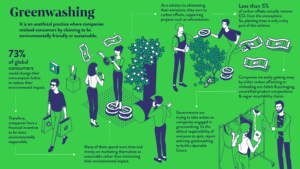
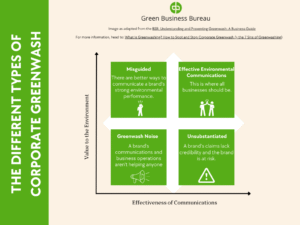
Regulators and watchdogs are aggressively targeting misleading sustainability claims. Penalties, litigation, and reputational fallout await non-compliant brands.
V. From Strategy to Execution: Embedding Sustainability
1. Set Science-Based Targets
Adopt Science Based Targets initiative (SBTi)-aligned emissions reductions. Net Zero by 2050 is table stakes—leaders aim for 2040 or sooner.
2. Integrate ESG into Core Strategy
Sustainability must be embedded in:
-
Capital allocation
-
M&A and due diligence
-
R&D and product design
-
Procurement and supply chain
The sustainability team can’t work in a silo—they must be embedded into finance, ops, marketing, and HR.
3. Build a Data and Disclosure Engine
You can’t manage what you can’t measure. Invest in ESG data platforms, audit trails, and reporting frameworks (e.g., GRI, SASB, TCFD).
4. Link Executive Pay to ESG KPIs
Tie a portion of variable compensation to ESG metrics (e.g., emissions, DEI goals, employee well-being). What gets rewarded gets prioritized.
VI. Leading Practices: Corporate Sustainability in Action
1. Microsoft: Carbon Negative by 2030
Microsoft has committed to removing all historical carbon emissions since its founding. It prices internal carbon at $100/ton, funds climate innovation, and requires suppliers to meet emissions targets.
2. Ørsted: From Fossil to Renewables
Ørsted pivoted from a fossil-fuel utility to a global leader in offshore wind. Its transformation proves that even legacy firms can become sustainability vanguards.
3. Walmart: Project Gigaton
Walmart’s initiative aims to eliminate one gigaton of emissions from its global value chain by 2030. It supports suppliers with tools, targets, and collaboration platforms.
VII. The Green Talent War
Sustainability is not just a tech or policy issue—it’s a talent issue.
1. New Roles in Demand
-
ESG analysts
-
Circular economy designers
-
Carbon accountants
-
Climate risk modelers
-
Chief Sustainability Officers
2. Sustainability Skills Across the Org
Every function—from finance to procurement—needs sustainability literacy. Train your entire workforce. Build green skills into onboarding and performance management.
3. Purpose-Driven Culture
Talent—especially younger generations—are choosing employers based on purpose. A credible sustainability strategy is now an employer brand differentiator.
VIII. Challenges and Trade-offs
1. Data Gaps and Inconsistencies
Many ESG metrics are self-reported, unaudited, and inconsistent. Standardization is improving but remains a challenge.
2. Short-Termism
Boards and executives often prioritize quarterly earnings over long-term ESG value creation. This misalignment must be corrected through governance and incentives.
3. Greenwashing Risks
Superficial sustainability efforts invite backlash. Stakeholders are savvier. Authenticity, transparency, and third-party validation are essential.
4. Complexity of Scope 3 Emissions
For most companies, Scope 3 (indirect emissions from supply chain, product use, etc.) accounts for the majority of emissions—but is the hardest to track and reduce.
IX. Emerging Trends: The Next Horizon of Sustainability
1. Circular Economy
Linear “take-make-waste” models are obsolete. Companies are redesigning products and processes to enable reuse, remanufacturing, and recycling.
2. Nature-Positive Strategies
Beyond carbon, biodiversity and ecosystem restoration are gaining traction. Natural capital accounting is the next frontier.
3. AI for Sustainability
AI is being used for:
-
Smart grid management
-
Crop optimization
-
ESG risk modeling
-
Real-time emissions monitoring
4. Carbon Markets and Offsets
Voluntary and compliance carbon markets are expanding. However, integrity matters—offsets must be high-quality, additional, and verifiable.
X. Boardroom and C-Suite Imperatives
-
Mandate Sustainability from the Top
Sustainability must be a board agenda item with direct oversight, not a CSR side project. -
Capitalize on Sustainability-Driven Innovation
Unlock new products, services, and business models aligned to sustainability megatrends. -
Integrate ESG into Risk Management
Embed climate and social risks into enterprise risk frameworks and scenario planning. -
Enhance Disclosure and Assurance
Provide credible, third-party verified ESG disclosures that go beyond checkbox compliance. -
Redefine Success
Move from pure shareholder primacy to stakeholder capitalism: people, planet, and profit.
Conclusion: The Sustainability Decade Has Arrived
The 2020s will define whether corporations become part of the solution or part of the problem. Sustainability is no longer about incremental change—it’s about business model reinvention. Those who lead will gain trust, talent, and total addressable market. Those who delay will face regulatory fines, customer churn, and stranded assets.
The future is not just digital. It is sustainable. And the time to act is now.
https://www.sciencedirect.com/science/article/pii/S0263237324001804
https://link.springer.com/article/10.1007/s10668-024-05009-2