 By Huong Fun Fun
Malaysia’s financial technology landscape is undergoing a massive transformation, driven by digital banks, instant e-wallet payments, and strict regulatory frameworks from Bank Negara Malaysia (BNM). At the center of this financial evolution is the country’s physical identity infrastructure: the MyKad.
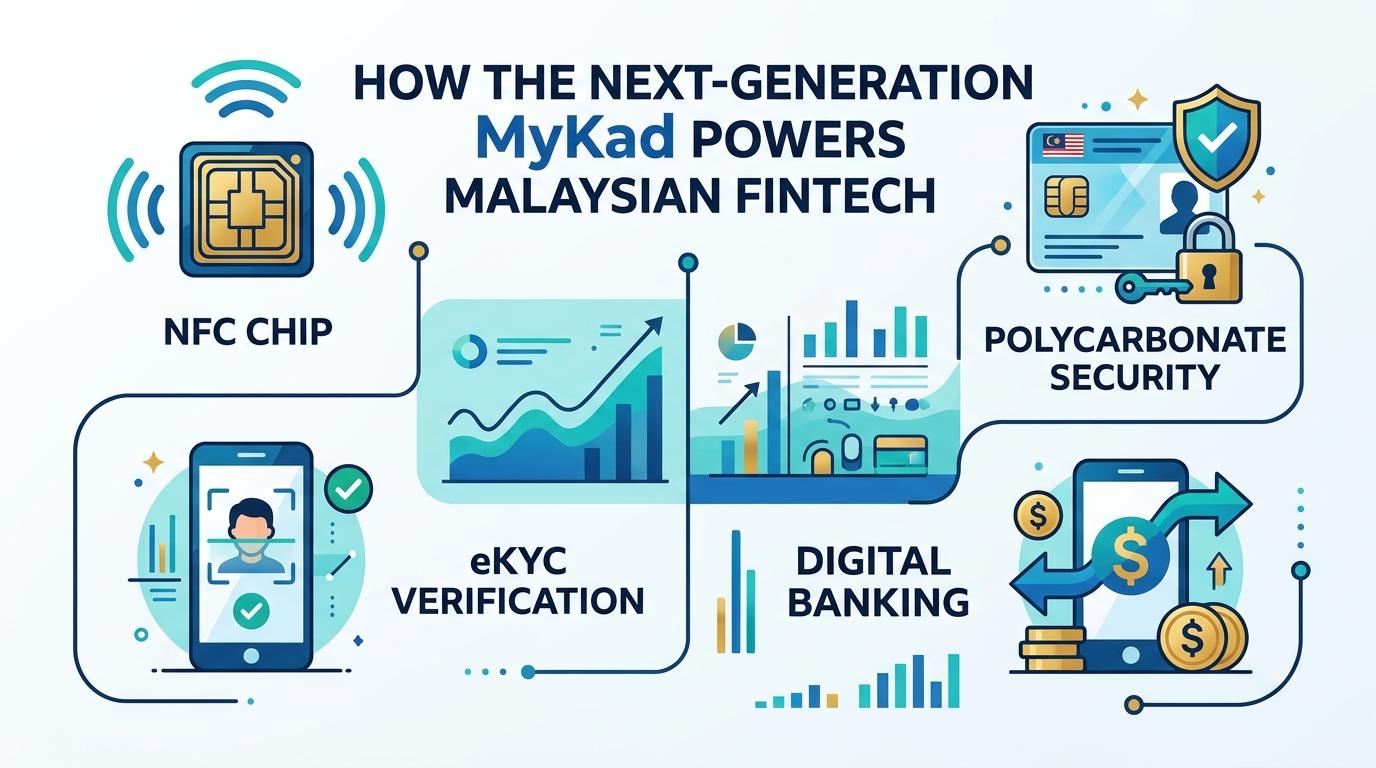
With the rollout of Malaysia’s next-generation MyKad—featuring 53 upgraded security features, advanced polycarbonate construction, dynamic holograms, and a contactless dual-interface NFC chip—the intersection of physical identification and digital finance (Fintech) has reached a critical turning point.
Here is how the new MyKad is poised to reshape the Malaysian fintech ecosystem, streamline electronic Know Your Customer (eKYC) onboarding, combat financial fraud, and redefine digital identity integration.
1. Revolutionizing eKYC and Instant Account Opening
For fintech platforms, digital banks, and brokerage apps, customer onboarding speed is key to user acquisition. Historically, remote onboarding via eKYC required users to scan their MyKad, capture a selfie, and undergo liveness detection. However, document tampering, poor camera quality, and optical character recognition (OCR) errors frequently created friction or security vulnerabilities.
The upgraded MyKad features laser-engraved personal details, a Ghost Image (secondary smaller photo), and a dual-interface chip supporting Near Field Communication (NFC) technology.
-
NFC-Powered eKYC: Instead of relying solely on optical scans of physical cards, modern fintech apps can allow users to tap their MyKad against an NFC-enabled smartphone. The smartphone can verify encrypted chip data directly, drastically reducing identity fraud, reducing drop-off rates during registration, and verifying identity within seconds.
-
Biometric Binding: Enhanced laser elements and biometric QR verification ensure that the physical card remains cryptographically tied to its genuine holder, preventing identity theft during account creation.
2. Unlocking Stronger Defense Against Financial Fraud & Deepfakes
As generative AI tools advance, synthetic identity fraud and deepfake photo manipulations have emerged as primary threats to online financial institutions. Fraudsters often modify names or swap pictures on traditional identity documents to bypass digital verification systems.
The new MyKad combats this with 53 distinct security features:
-
Polycarbonate Core & Microtext: Information is laser-etched deep within core layers rather than printed on the surface, making physical alteration impossible without destroying the card.
-
Ultraviolet (UV) Elements & Guilloche Patterns: Intricate background designs ensure physical validity checks are foolproof.
-
Dynamic Security Holograms: Prevents fraudulent video re-play attacks during live verification.
For fintech firms, this hardware-level trust drastically lowers fraud losses and operational compliance costs associated with manual review pipelines.
3. The Unbundling of Transit Payments and Financial Identification
A major shift in the new MyKad is the removal of built-in Touch ‘n Go (TNG) payment capabilities. Previously, the MyKad served a dual role as both a national identification card and an open-loop transit prepaid card.
This decoupling marks a clear strategic distinction in Malaysia’s fintech architecture:
-
MyKad as a Pure Identity Anchor: The physical card focuses exclusively on high-security authentication, cryptographic verification, and government identification.
-
Digital Wallets as Payment Drivers: By separating stored-value payment features from the identity card, users are directed to dedicated e-wallets, contactless debit/credit cards, or mobile payment apps.
This separation encourages greater innovation among e-wallet operators, digital banks, and payment gateways competing in open-loop payment ecosystems.
4. Synergy with MyDigital ID and the Future of Open Banking
The launch of the new MyKad coincides with the rapid adoption of MyDigital ID, Malaysia’s national digital identity management system. Rather than competing, the physical MyKad and MyDigital ID work together as complementary security pillars.
While MyDigital ID serves as a passwordless single sign-on (SSO) credential for online government portals and banking apps, the new MyKad serves as the high-security hardware anchor. When registering for a digital ID or re-verifying a bank account on a new device, the new MyKad provides the ultimate offline-to-online verification trust point.
As BNM advances its Open Banking and API frameworks, this multi-layered identity infrastructure will allow fintech startups to seamlessly offer personalized loan approvals, automated micro-investments, and instant insurance underwriting—all backed by government-grade authentication.
Conclusion
The rollout of Malaysia’s next-generation MyKad is more than a routine identity card refresh; it represents a major upgrade to the country’s financial security infrastructure. By pairing advanced biometrics, NFC capabilities, and anti-fraud engineering with a thriving fintech ecosystem, Malaysia is paving the way for safer, faster, and more seamless digital financial experiences. For digital banks and fintech innovators, leveraging these cryptographic capabilities will be key to building consumer trust in an increasingly digital world.
References
-
Jabatan Pendaftaran Negara (JPN) – Official Portal & Information Updates: https://www.jpn.gov.my
-
Bank Negara Malaysia (BNM) – Electronic Know-Your-Customer (e-KYC) Policy Framework: BNM e-KYC Policy Document
-
MyDigital ID (MIMOS / Government Portal) – Official Digital Identification Service: https://www.digital-id.my / Malaysia Government Portal Registration
-
Berita Harian – Penyedia eKYC MyKad baharu kemas kini sistem: Berita Harian Article Link